




Can Your Daycare Accommodate Cloth Diapers?
The first — and most important — step is a conversation with your care provider before your child's first day. Cloth diaper policies vary widely across Canada: what's routine at one centre may require extra paperwork at another, and policies differ by province, regional health authority, and even individual centre.
Questions to ask your provider:
- Do you accept cloth diapers? Is there a written policy I can review?
- Will staff handle soiled diapers, or do they need to be stored as-is until pickup?
- Is rinsing permitted on-site, or does everything go straight into a wet bag?
- How many diapers and wet bags should I send each day?
- Are there any labelling requirements?
Note: Rules vary by province and by individual centre. Always confirm directly with your specific provider — never assume a neighbouring centre's policy applies to yours.
Choose a Daycare-Friendly System
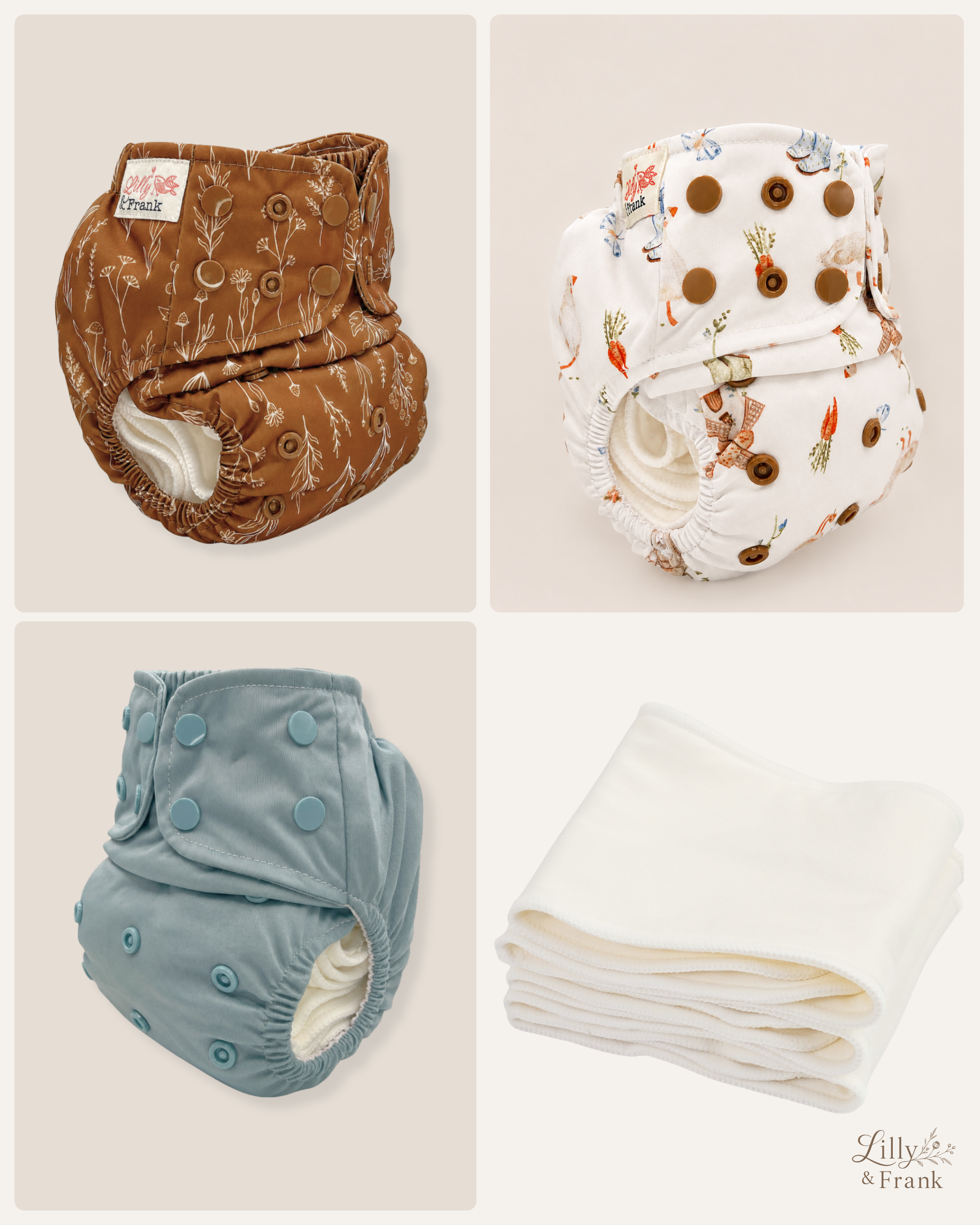
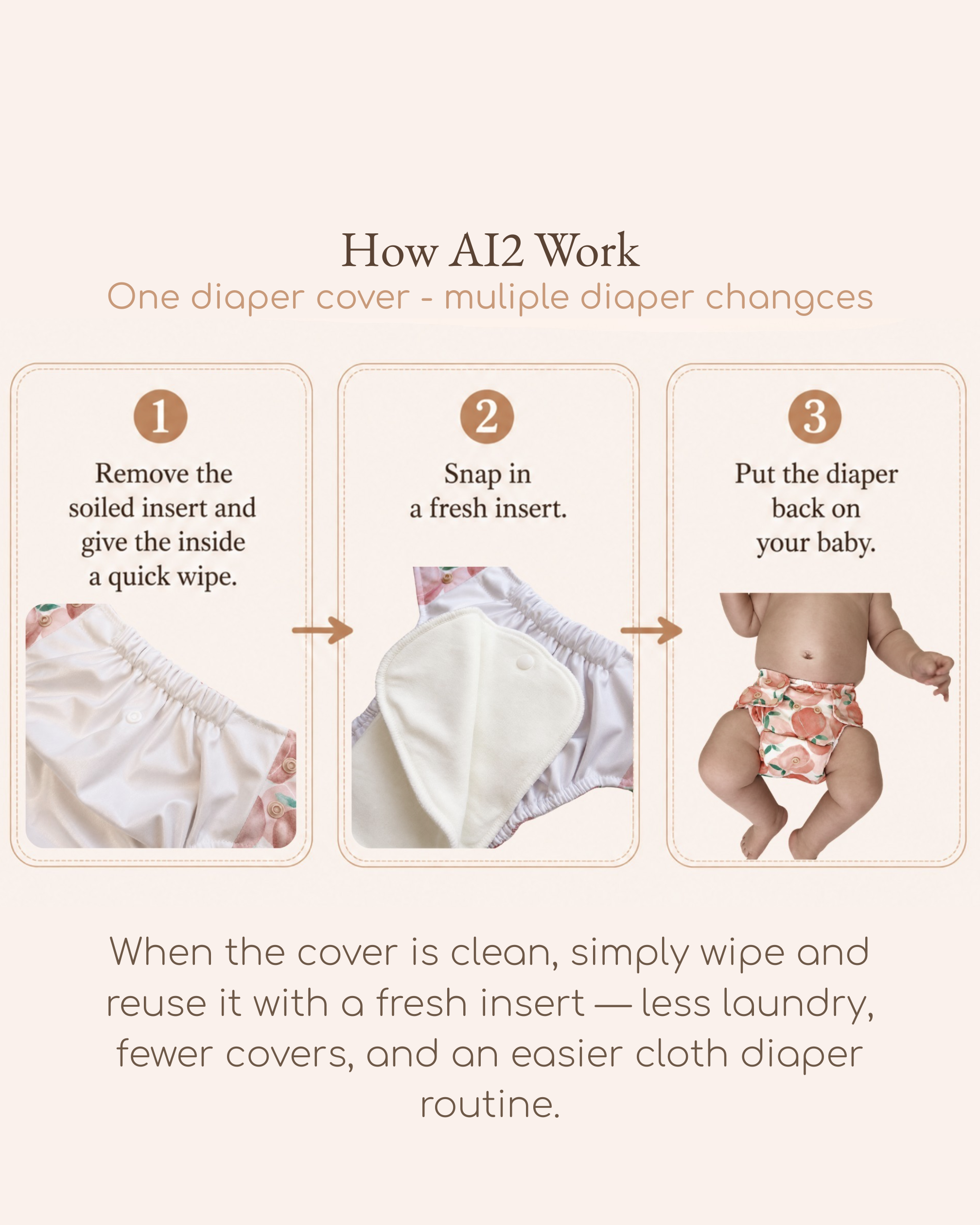
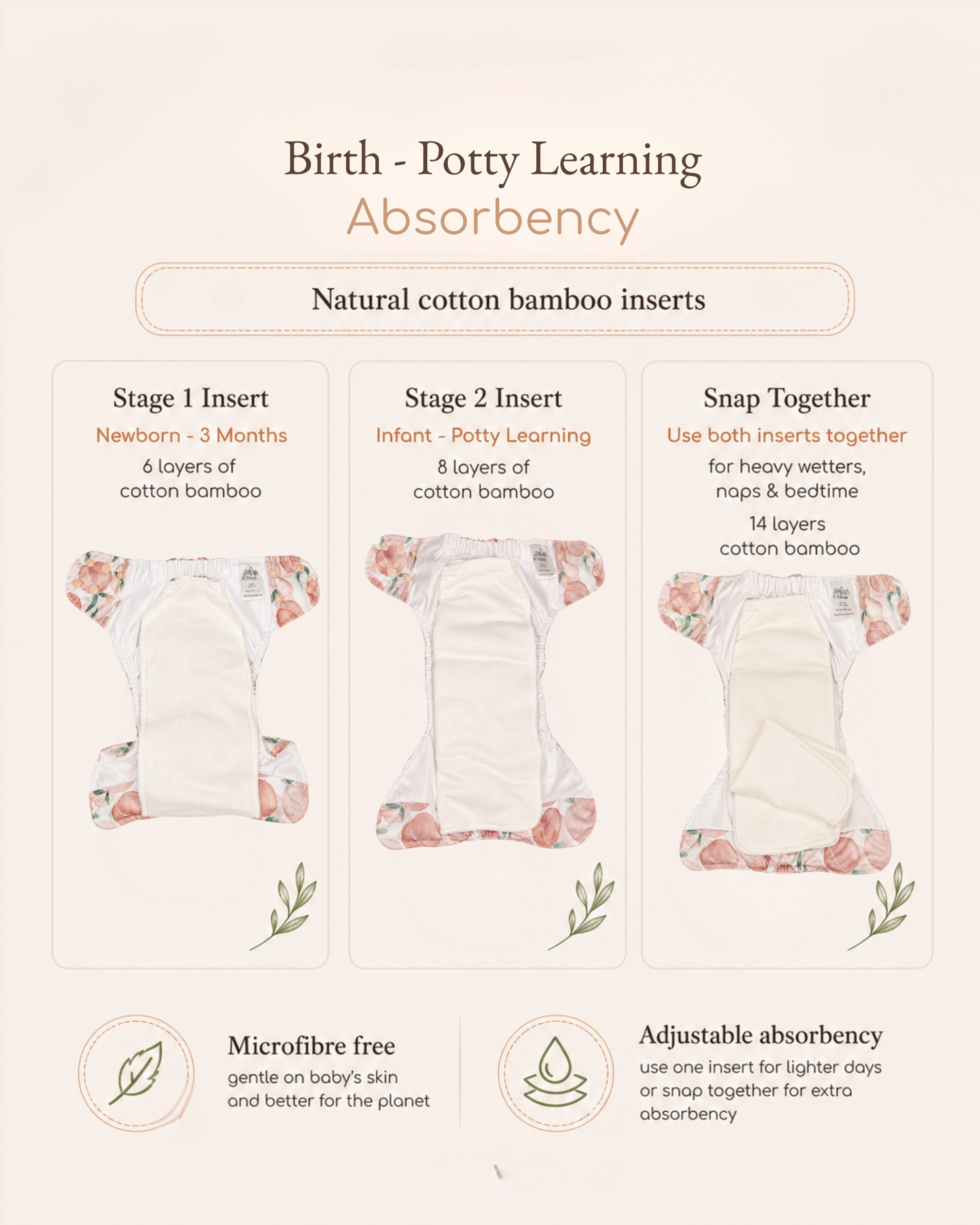
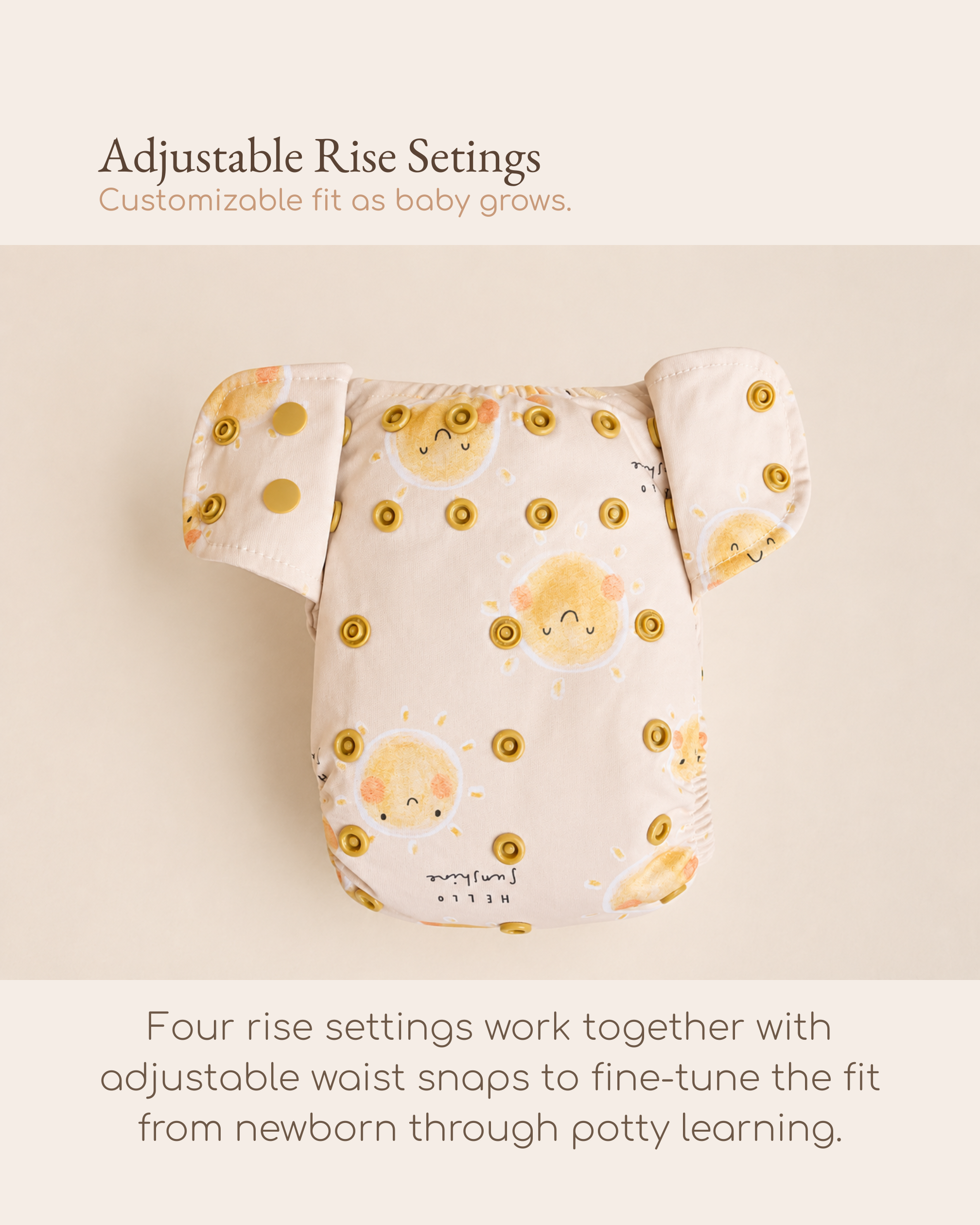
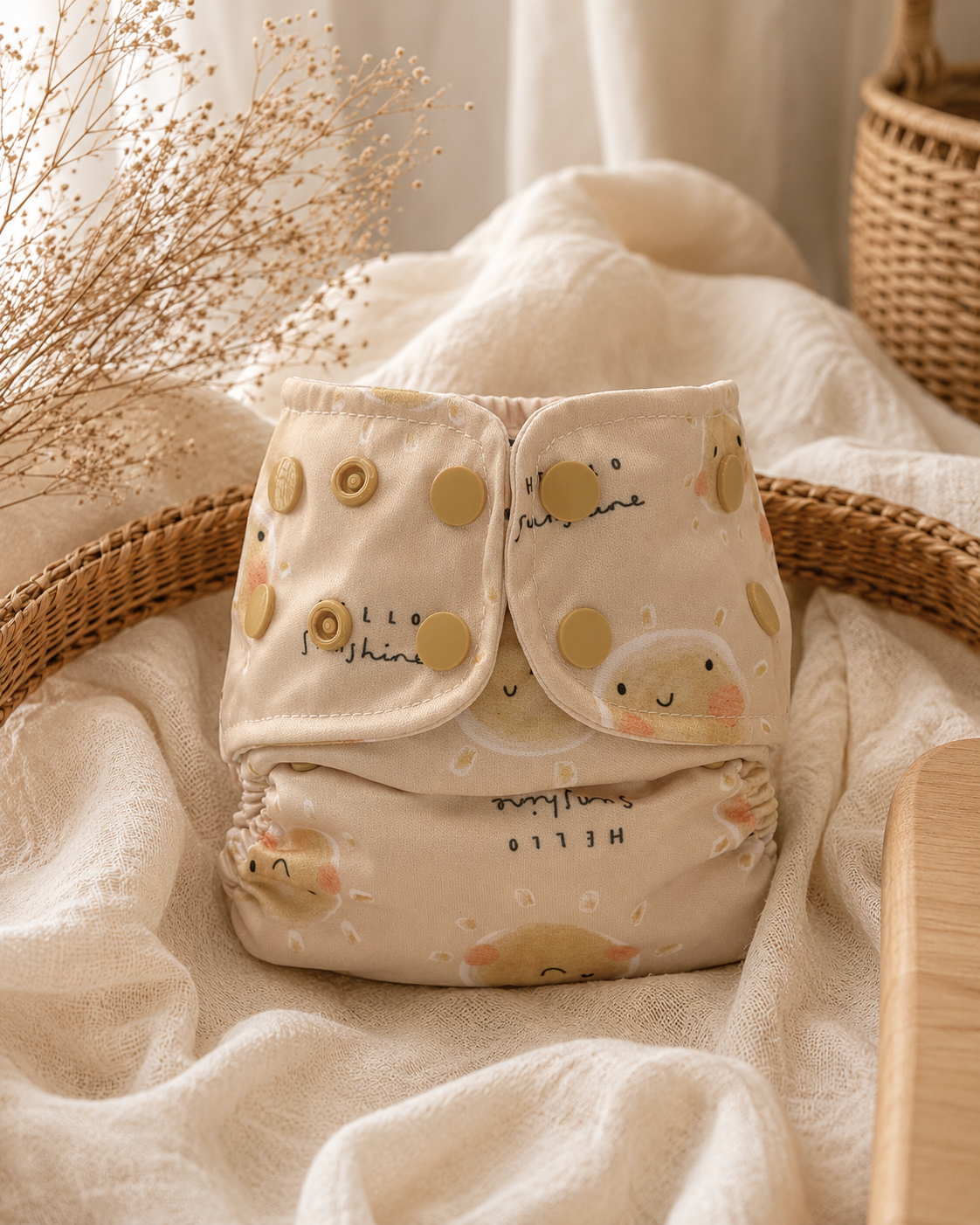
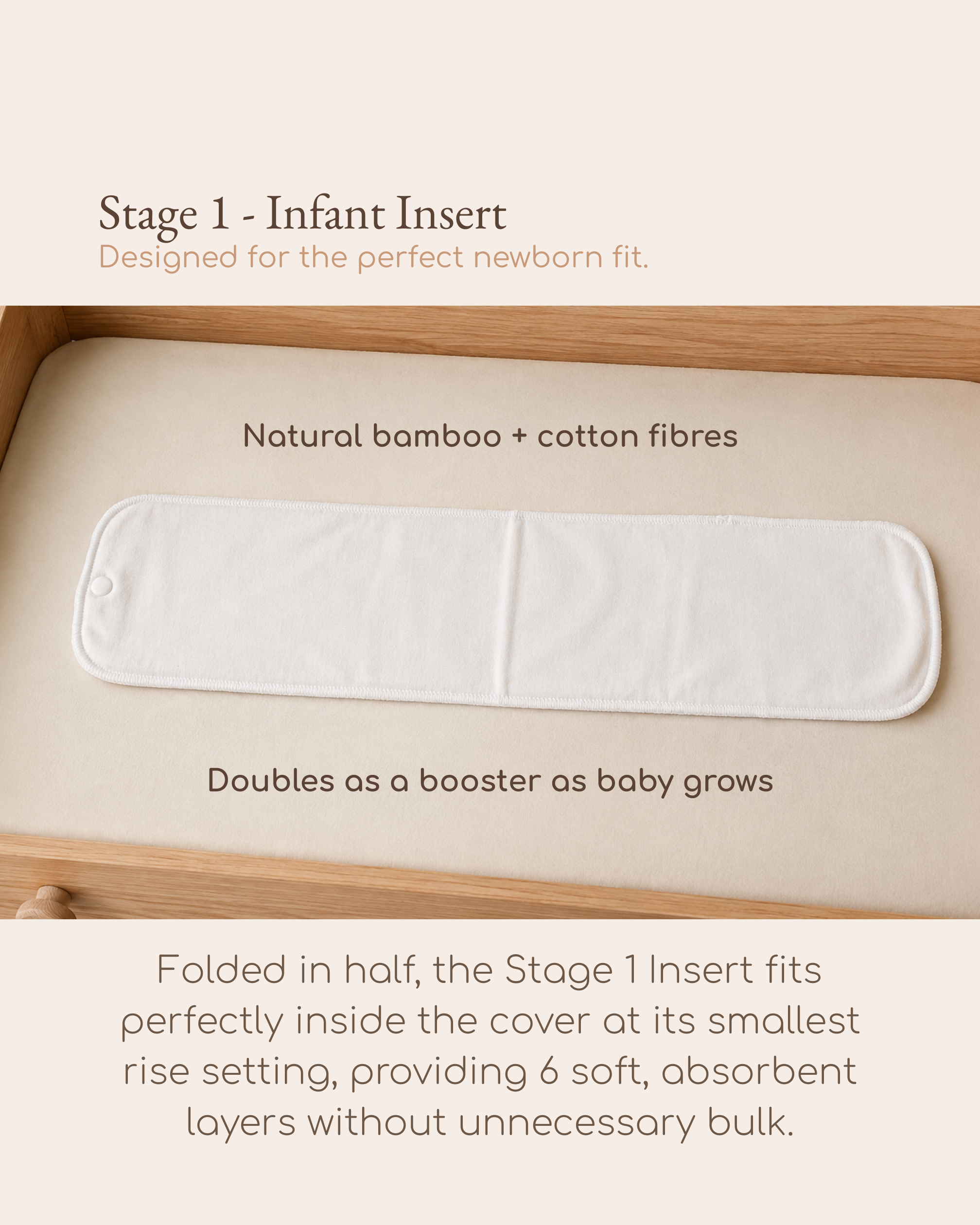
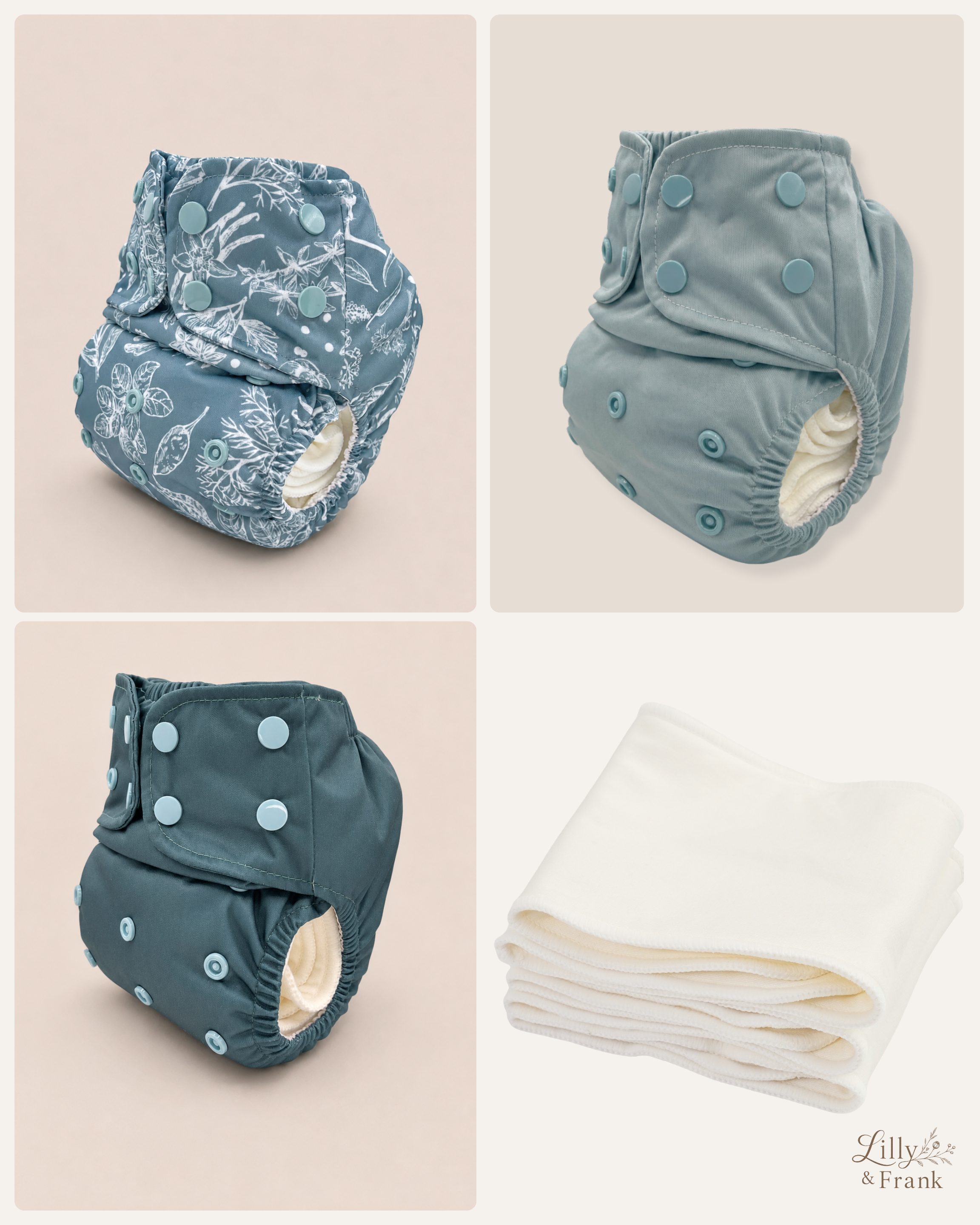
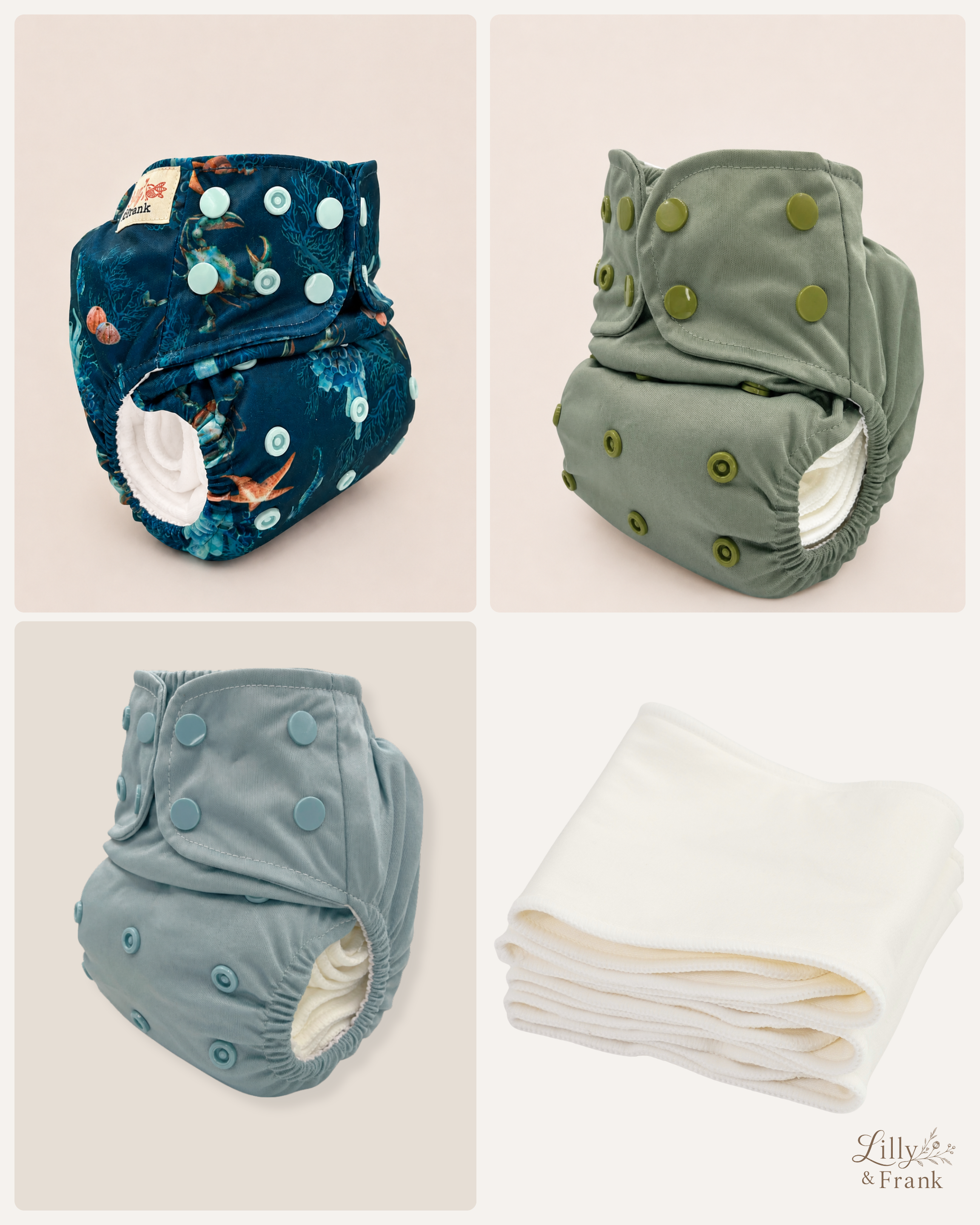
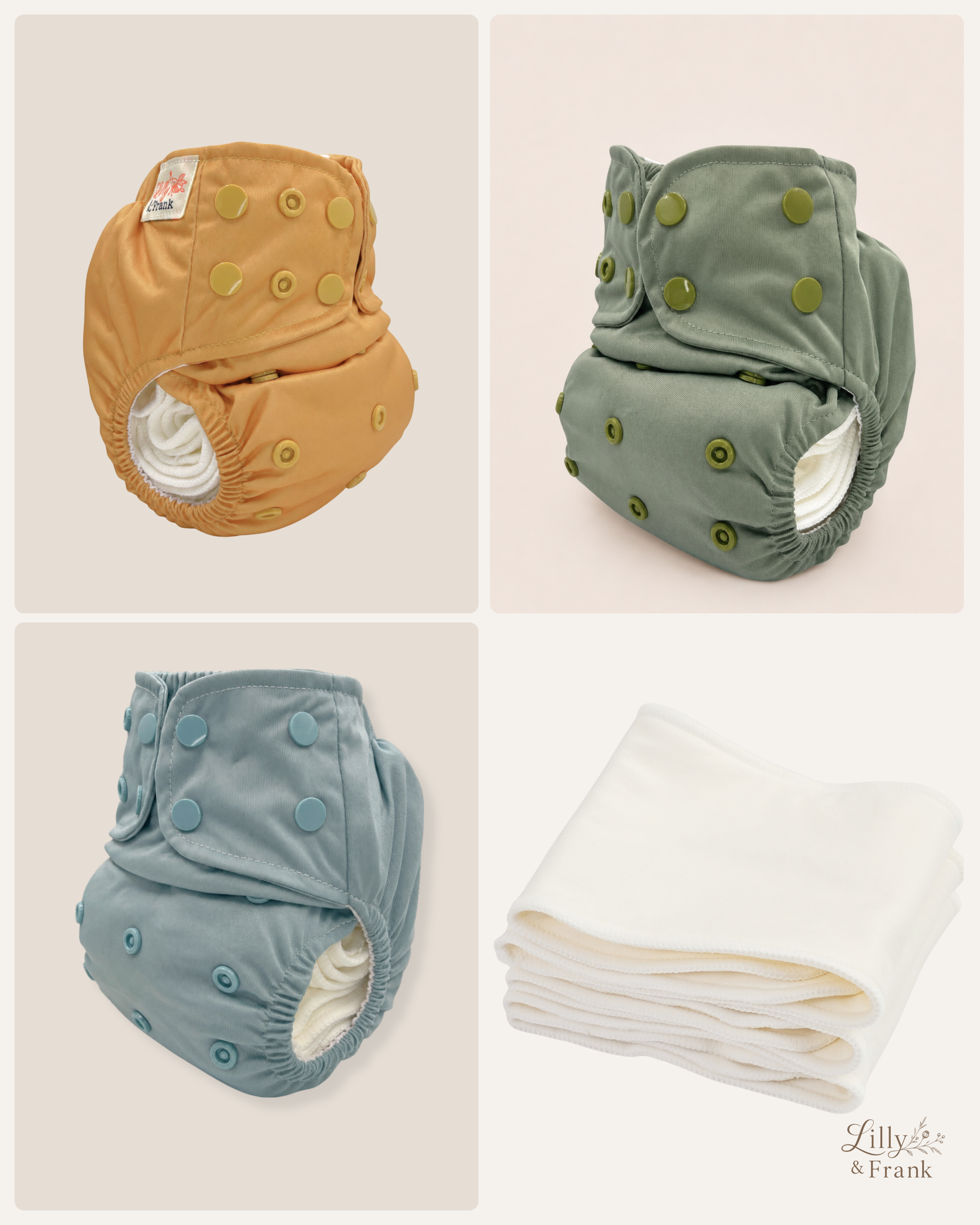
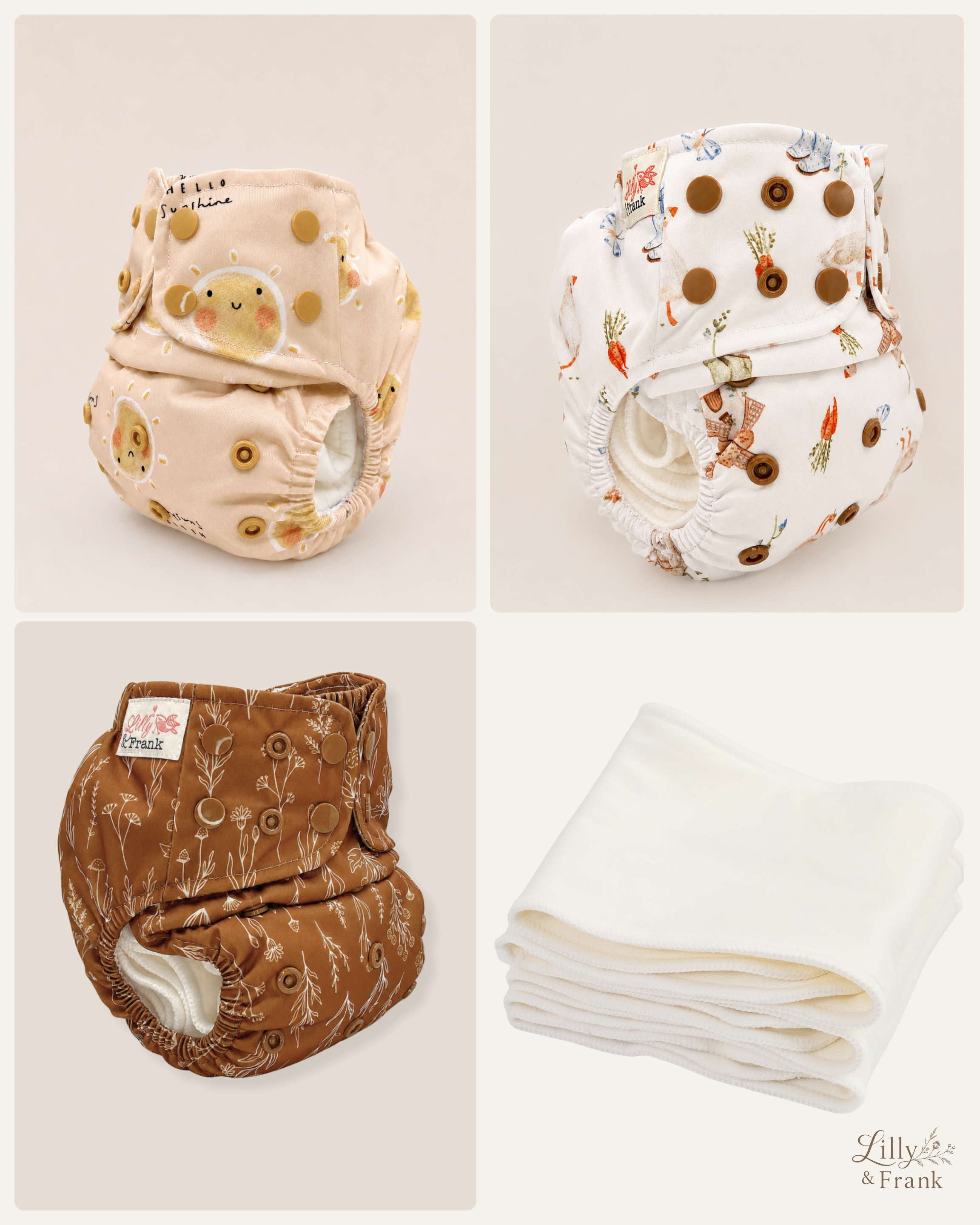
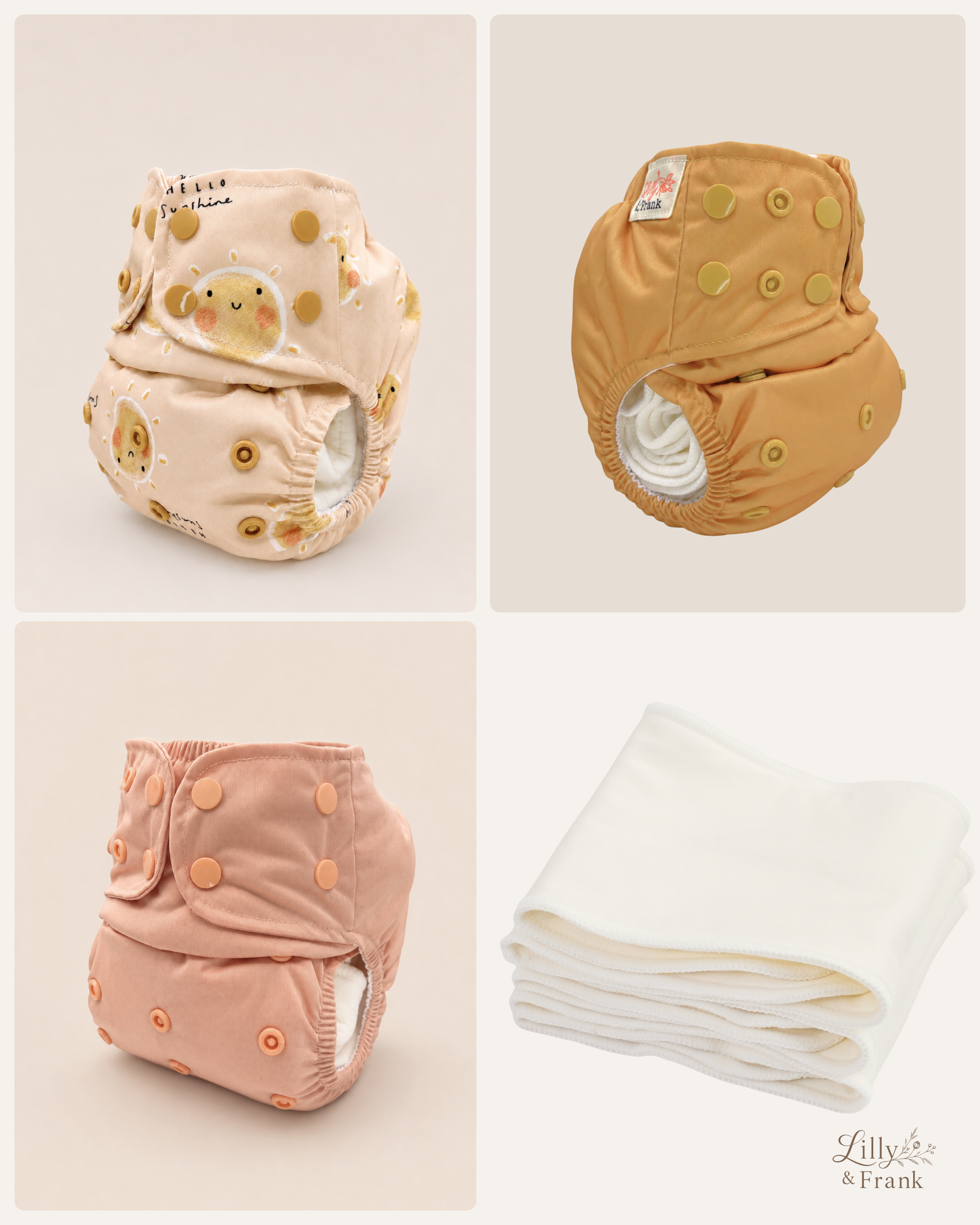
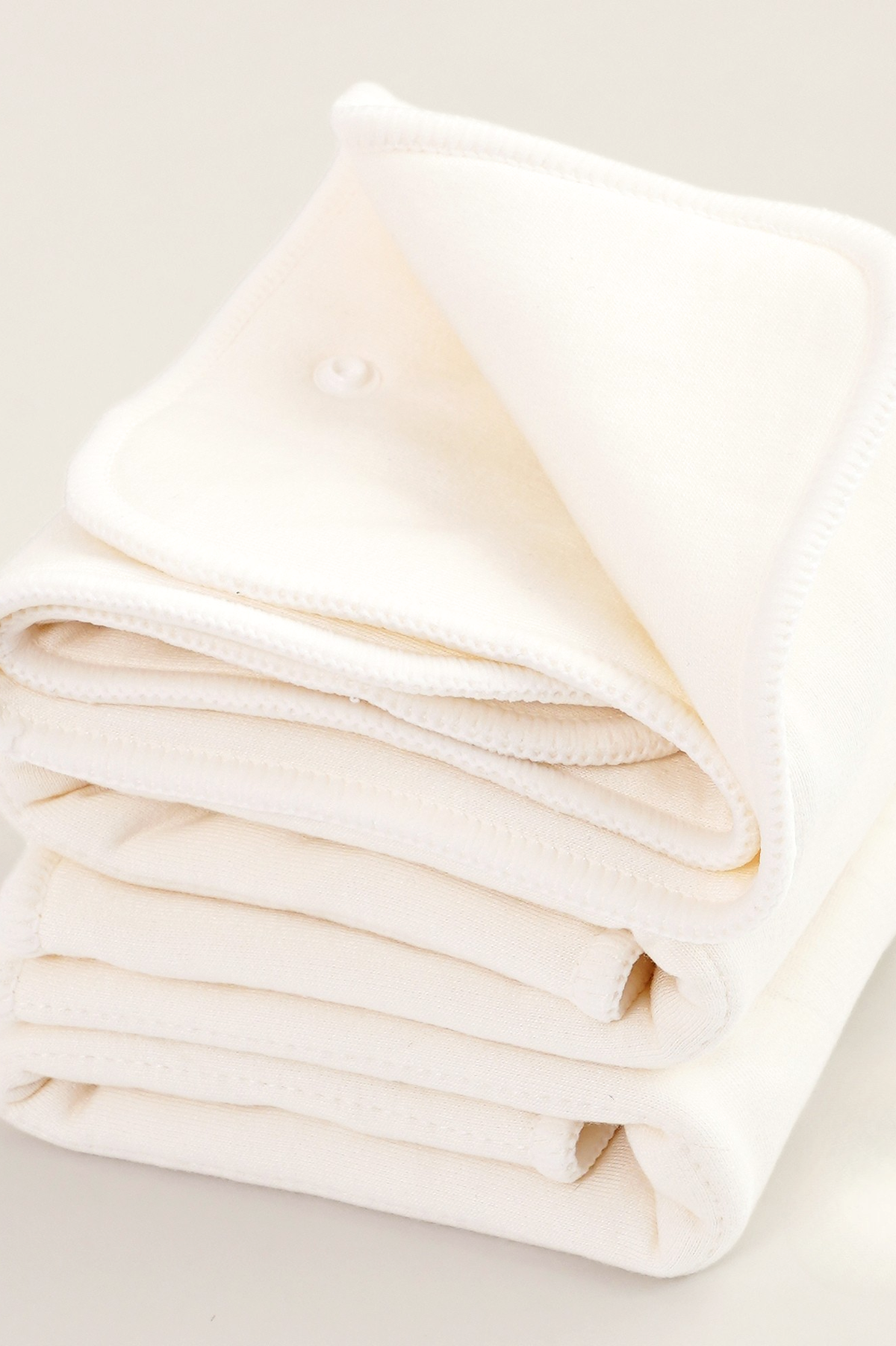
The goal is a system that's easy for caregivers to use, even if they're new to cloth. Lilly & Frank's all-in-two system makes changes straightforward: the provider simply snaps in a fresh insert. There's no pocket to stuff and no folding to learn.
Make all-in-two changes easy for your provider:
- Show staff how to remove the used insert and snap a fresh one into place before your child's first day.
- Send clean inserts ready to use, along with spare outer diapers so staff can replace the whole diaper when needed.
- Agree with your provider on when an outer diaper can be reused and when the whole diaper should be changed, following your product's care guidance and the centre's hygiene policy.
- Keep fresh inserts separate from used items, and label both inserts and outer diapers.
Pack enough inserts for your child's usual number of changes, plus a few extras. A short demonstration and a simple written note can help staff feel comfortable with the snap-in system.
If an all-in-two system sounds right for your daycare routine, explore our AI2 diapers and starter bundles.
Fitted diapers with a cover are another good option. The provider takes off the cover and used fitted diaper, puts on a fresh fitted diaper, then puts the cover over top. This involves a little more work than snapping a fresh insert into an all-in-two, but it's still a straightforward option for caregivers who are comfortable with the routine.
If you choose fitted diapers, send enough clean fitted diapers for the day plus extras, along with spare covers. Demonstrate the change at drop-off and agree on when a cover can be reused or should be replaced, following your care guidance and the centre's hygiene policy.
Label Everything Clearly
Daycares handle belongings for multiple children simultaneously. Clear, permanent labelling protects your investment and prevents mix-ups.
Labelling checklist:
- ☐ Label every diaper with your child's full name (permanent marker on the tag, or an embroidered label)
- ☐ Label each wet bag with your child's name
- ☐ Label any inserts or liners separately if they can be separated from the diaper
- ☐ Label the diaper bag or pouch used to transport everything
Iron-on or sewn-in name labels are more durable than sticker labels on fabric. Avoid labelling directly on waterproof PUL with permanent marker — use tags or inner fabric instead to preserve the laminate.
Pack the Right Wet Bags
A good wet bag is the backbone of a cloth-diaper daycare setup. Plan to have at least two in rotation: send one labelled wet bag for used diapers and keep another clean bag ready for the following day. If you want clean and used items kept separate at daycare, choose a wet/dry bag with two compartments or pack the clean diapers in a separate packing pod.
What to look for in a daycare wet bag:
- Zippered closure — keeps odours contained in a shared space
- Waterproof lining (PUL or TPU) — prevents leaks from soaked diapers
- Medium to large size — fits a full day's worth of diapers without overstuffing
- Washable — goes straight into the wash with your diapers
For most full daycare days, a medium wet bag comfortably holds 4–6 diapers. For longer days or infants with frequent changes, an XL bag gives you breathing room.
Browse our wet bag collection to find the right fit for your daycare routine:
- Wet Dry Bag – Medium — two zippered compartments, one for clean dry items, the other for dirty wet items
- Extra Large Wet Bag — ideal for longer days with ample space
- Packing Pods — roomy, rectangle shape that is great for organized packing
We recommend keeping a dedicated rotation: daycare bags stay in the daycare bag, home bags stay in the nursery. This prevents the frantic morning scramble for a clean bag.
Send a Simple Care Note
A short, friendly care note for your provider removes guesswork and builds confidence — especially if your centre is new to cloth. Keep it to one page, laminated if possible so it can be wiped clean and reused.
What to include:
- For all-in-two diapers: how to remove a used insert and snap in a fresh one, plus your agreed instructions for changing the outer diaper
- For fitted diapers: how to take off the cover and used fitted, put on a fresh fitted, and put the cover over top, plus your agreed instructions for replacing the cover
- Where used diapers, inserts, and covers go, following the centre's agreed handling procedure
- Which diaper cream you supply and how it should be used with your diapers
- Your contact info for questions
Sample language you can adapt for all-in-two diapers:
"Thank you for using our all-in-two cloth diapers with [Child's name]! At each change, remove the used insert and snap in a fresh one. Please place used items in the labelled wet bag, following our agreed handling procedure. Change the outer diaper whenever needed, as we discussed. Fresh inserts and spare outer diapers are in [location]. If you have any questions, please text me at [your number]. We really appreciate it!"
If you're sending fitted diapers, use this change instruction instead: "Take off the cover and used fitted diaper, put on a fresh fitted, then put the cover over top. Replace the cover whenever needed, as we discussed. Clean fitted diapers and spare covers are in [location]."
A positive, low-pressure tone goes a long way. Most caregivers are happy to help once they know what's expected.
Daycare Cloth Diaper Checklist at a Glance
| Step | Done? |
|---|---|
| Confirmed provider's cloth diaper policy in writing | ☐ |
| Demonstrated your chosen system: all-in-two with snap-in inserts, or fitted diapers with covers | ☐ |
| Packed spare inserts and outer diapers, or spare fitted diapers and covers | ☐ |
| Labelled every diaper, insert, cover, and wet bag | ☐ |
| Packed one labelled wet bag for used diapers, with a clean spare in rotation | ☐ |
| Prepared a simple one-page care note for staff | ☐ |
| Sent a trial run before the first full day | ☐ |
A Note on Washing When You Get Home
Daycare diapers may sit in a wet bag for 8–10 hours, so it helps to empty the bag when you get home. Remove any solids according to your usual routine, then transfer the diapers to your dry pail or wash them promptly. Follow your regular wash routine and the care instructions for your diapers and wet bag.
If you're still dialling in your wash routine, we have guidance to help you get consistent results regardless of your water type or machine.
You've Got This
Sending a baby to daycare in cloth diapers is completely doable — many Canadian families make it work successfully. The key is a brief conversation with your provider, a simple system, clear labels, the right wet bags, and one friendly note. Once the routine is set, it runs on autopilot.
Questions about which wet bag size is right for your daycare setup? Get in touch — we’re happy to help you figure it out. Lilly & Frank